Your heart is the engine that keeps your body running, and knowing what a normal heart rate is can tell you a lot about your overall health. But did you know that healthy heart rate ranges change with age? What’s normal for a toddler is very different from an adult or senior. Understanding these differences can help you spot potential issues early, track your fitness, and maintain a healthier lifestyle.
Whether you’re a parent checking your child’s pulse, a fitness enthusiast tracking your resting heart rate, or simply someone curious about your body, this guide has you covered. We’ll break down normal heart rates for every age group, explain why they vary, and provide practical tips on how to measure your pulse accurately. By the end, you’ll have a clear picture of what your heart rate says about your health—and how to keep it in check.
Read More: what does hgs mean
What Is a Normal Heart Rate?
A normal heart rate, also called resting heart rate, is the number of times your heart beats per minute (BPM) when your body is at rest. For most adults, a healthy resting heart rate ranges from 60 to 100 BPM, but it can be lower for highly fit individuals. Babies, children, and seniors naturally have different ranges, which is why age matters when checking your pulse.
Your heart rate is influenced by many factors. Activity level, stress, caffeine intake, medications, and overall fitness can all cause temporary changes. That’s why it’s important to measure your heart rate when you’re calm and at rest for an accurate reading.
Understanding what a normal heart rate looks like is the first step in monitoring your heart health. With this knowledge, you can track changes over time and notice anything unusual early, keeping your heart strong and healthy.
Normal Heart Rate by Age
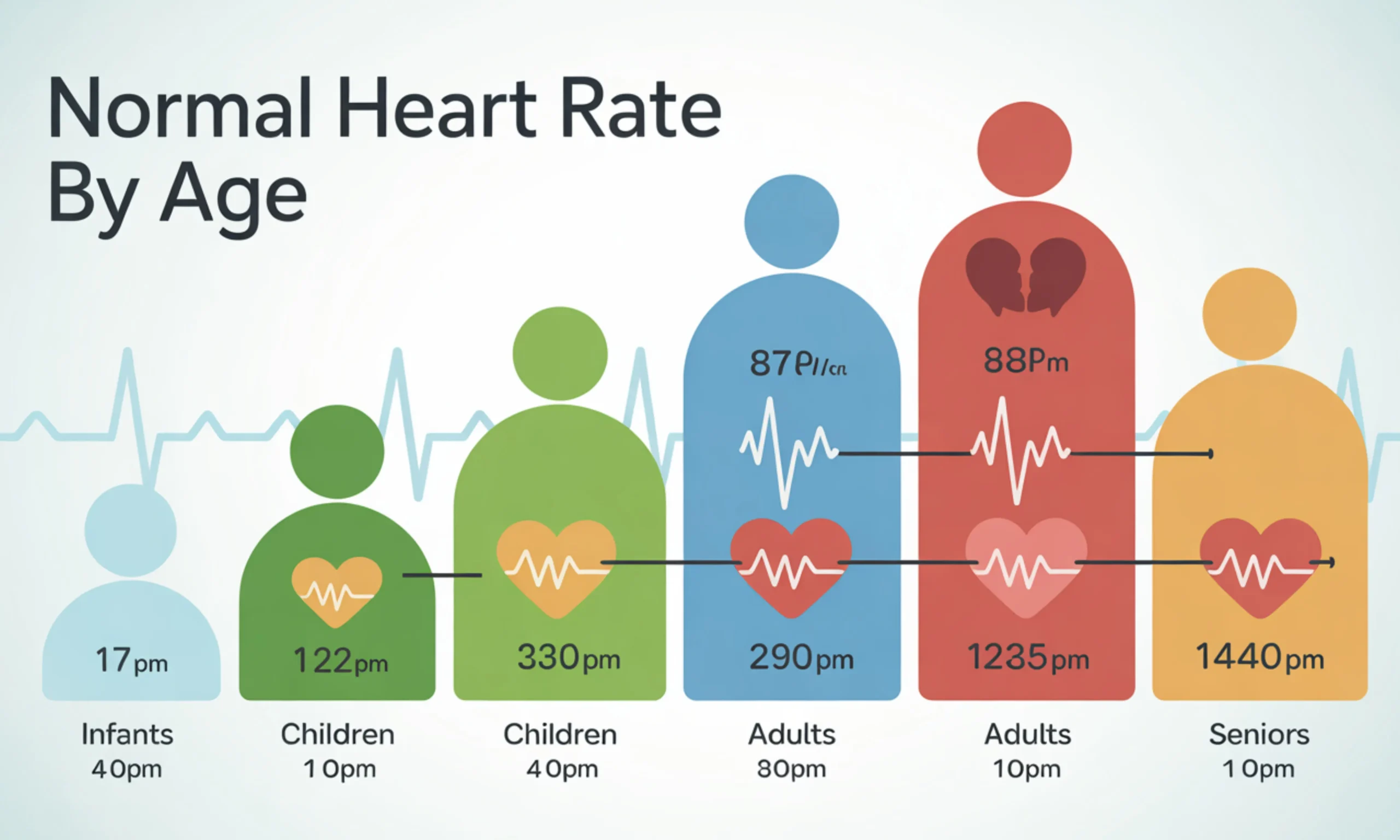
Your resting heart rate changes as you grow, reflecting your metabolism, activity level, and overall heart health. Here’s a simple guide to normal heart rates by age:
| Age Group | Normal Resting Heart Rate (BPM) |
|---|---|
| Newborns (0-1 month) | 70–190 |
| Infants (1-12 months) | 80–160 |
| Toddlers (1-3 years) | 80–130 |
| Preschoolers (4-5 years) | 80–120 |
| Children (6-10 years) | 70–110 |
| Adolescents (11-17 years) | 60–100 |
| Adults (18-65 years) | 60–100 |
| Older Adults (65+) | 50–100 |
Breakdown by Age Group
Newborns & Infants: Babies have higher heart rates because their bodies are growing rapidly and their metabolism is fast.
Toddlers & Children: Heart rates gradually slow as the heart becomes more efficient.
Adolescents & Adults: Resting heart rates stabilize, reflecting a mature cardiovascular system.
Older Adults: Heart rate may slow slightly due to age-related changes, but 50–100 BPM is still normal.
Understanding these ranges helps you track your own heart rate or your child’s and notice unusual patterns early.
Why Heart Rate Varies With Age
Your heart rate isn’t a one-size-fits-all number—it naturally changes as you age. Babies and young children have faster heart rates because their smaller hearts need to pump more frequently to circulate blood efficiently. As you grow, the heart becomes larger and more efficient, so resting heart rate gradually slows.
Fitness level also plays a role. Highly active individuals often have lower resting heart rates because their hearts pump more blood with each beat, requiring fewer beats per minute. On the other hand, a sedentary lifestyle may contribute to higher resting heart rates.
Other factors can temporarily influence heart rate at any age, including stress, caffeine, medications, sleep quality, and illness. By understanding why heart rates vary, you can better interpret your readings and recognize what’s normal for your age and lifestyle.
How to Measure Your Heart Rate Accurately
Knowing your heart rate is only helpful if you measure it correctly. Here are the best ways to get an accurate reading:
Manual Pulse Method
Place your index and middle fingers on your wrist (radial artery) or neck (carotid artery).
Count the beats for 60 seconds for the most accurate result, or 30 seconds and multiply by 2.
Ensure you’re sitting or lying down, calm, and relaxed.
Using a Heart Rate Monitor
- Smartwatches and fitness trackers provide continuous heart rate readings.
- Chest strap monitors are highly accurate, especially during exercise.
- Make sure the device is properly fitted for reliable data.
Tips for Consistency
- Measure your heart rate at the same time each day, preferably in the morning.
- Avoid caffeine, heavy meals, or intense exercise right before measuring.
- Take multiple readings over a few days for a more accurate average.
By following these methods, you can track your heart health effectively and notice any unusual changes early.
When a Heart Rate May Be Concerning
Most variations in heart rate are normal, but sometimes an unusual resting heart rate can signal a health issue. Being aware of warning signs helps you take action early.
Bradycardia (Low Heart Rate)
A resting heart rate below 50 BPM in adults may be considered low.
Common in highly fit individuals, but it can also indicate heart problems or medication effects.
Symptoms to watch for include dizziness, fatigue, shortness of breath, or fainting.
Tachycardia (High Heart Rate)
- A resting heart rate consistently above 100 BPM may be concerning.
- Causes can include stress, fever, anemia, or heart conditions.
- Symptoms may include palpitations, chest discomfort, or lightheadedness.
When to Seek Medical Advice
- Unexplained changes in heart rate
- Persistent symptoms like chest pain or severe dizziness
- Sudden shifts in heart rhythm
Understanding what’s normal and what’s not empowers you to protect your heart health and seek help when necessary.
How to Maintain a Healthy Heart Rate
Keeping your heart rate within a healthy range is easier than you might think. Simple lifestyle choices can make a big difference in your cardiovascular health.
1. Regular Exercise
Engage in cardio workouts like walking, jogging, cycling, or swimming.
Include strength and flexibility exercises for overall heart efficiency.
Aim for 150 minutes of moderate activity per week for optimal heart health.
2. Balanced Diet
- Eat heart-healthy foods like fruits, vegetables, whole grains, and lean proteins.
- Limit processed foods, excessive sugar, and unhealthy fats.
- Stay hydrated, as dehydration can temporarily increase heart rate.
3. Stress Management
- Practice meditation, deep breathing, or yoga to lower stress levels.
- Prioritize quality sleep, as lack of sleep can elevate resting heart rate.
- Take short breaks during work or daily routines to relax your body.
4. Avoid Harmful Habits
- Limit caffeine and alcohol intake.
- Avoid smoking, which can increase heart rate and damage arteries.
- Regular check-ups help detect potential issues early.
By incorporating these habits, you can support a strong, healthy heart and maintain a resting heart rate that reflects your well-being.
FAQs
What is the best time to check resting heart rate?
The most accurate reading is first thing in the morning, before getting out of bed or consuming caffeine.
Can stress or caffeine affect heart rate readings?
Yes. Stress, anxiety, and caffeine can temporarily raise your heart rate, so always measure in a calm state.
How do medications influence heart rate?
Some medications, like beta-blockers or thyroid treatments, can lower or raise your heart rate. Always consult your doctor about changes.
What is a healthy heart rate during exercise?
A safe target heart rate during moderate exercise is usually 50–70% of your maximum heart rate (220 minus your age).
Can heart rate indicate overall fitness?
Yes. Lower resting heart rates often indicate a stronger, more efficient heart, especially in physically active individuals.
Is it normal for heart rate to vary daily?
Yes. Daily fluctuations are normal due to activity, sleep, hydration, and stress. Track trends rather than single readings.
Can children have lower or higher heart rates than adults?
Absolutely. Children naturally have higher resting heart rates, and it gradually decreases as they grow.
When should I consult a doctor about my heart rate?
Seek medical advice if your heart rate is unusually high or low, or if you experience dizziness, chest pain, or fainting.
Conclusion
Understanding your normal heart rate by age is a simple yet powerful step toward better health. By knowing what’s typical for your age group, you can track your heart’s performance, notice changes early, and make informed decisions about your lifestyle. Whether you’re a parent monitoring your child, an adult keeping tabs on fitness, or a senior maintaining heart health, this knowledge empowers you to take control.
Maintaining a healthy heart rate is achievable through regular exercise, a balanced diet, stress management, and avoiding harmful habits. Combine these habits with consistent heart rate monitoring, and you’ll have a strong foundation for long-term cardiovascular health. Celebrate your progress, make small improvements daily, and enjoy the peace of mind that comes from taking care of your heart. After all, a happy heart supports a happy life.

Roony is the creative mind behind Rizz Line Studio, where words meet style and attitude. With a passion for clever captions, trendy rizz lines, and social media magic, Roony crafts content that speaks directly to today’s generation. Whether it's humor, charm, or wit Roony always delivers the perfect line to match the vibe.
